
 Venice
Arriving in Venice for the First Time: What Nobody Tells You
Arriving in Venice for the First Time: What Nobody Tells You
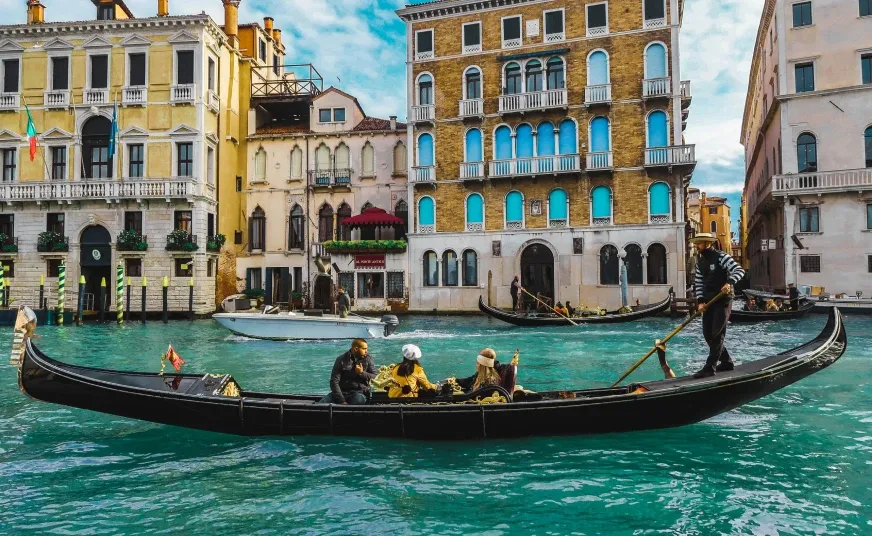
Venice does not work like other cities. This is not a criticism — it is simply a fact that every first-time visitor discovers within about fifteen minutes of arriving, usually while standing on a bridge with a suitcase that has wheels entirely unsuited to cobblestones, unsure of which direction the water is flowing and therefore which way they are facing.
The city is extraordinary. It is also genuinely confusing, logistically unusual, and full of small traps for the unprepared. This guide covers what you actually need to know before you arrive — not the things every travel website tells you, but the things that make a real difference.
Getting from the Airport: Your First Decision
Venice Marco Polo Airport sits on the mainland, approximately twelve kilometers from the historic center. The moment you walk out of arrivals, you face your first Venice decision: how do you actually get into the city?
The options are: the Alilaguna water bus (slow, shared, confusing if you have not used it before), a land taxi to Piazzale Roma (the closest point a car can reach), a shared bus to Piazzale Roma (cheap but crowded), or a private water taxi directly to your hotel's nearest water entrance.
The private water taxi is by far the best option for a first visit not because it is luxurious, though it is certainly comfortable, but because it deposits you at your hotel's actual door, on the water, without requiring you to navigate the streets with luggage before you have any idea where anything is. The Alilaguna is fine once you know the city. On your first arrival, at the end of a long flight, with bags, it is an unnecessary complication.
If your hotel is near Piazzale Roma or the train station, a land taxi or bus is perfectly practical. If it is anywhere further into the historic center and most good hotels are the water taxi is worth every euro.
Your Hotel Has No Road. This Is Normal.
Venice has no roads in the conventional sense. It has calli (narrow pedestrian streets), campi (squares), and canali (canals). Your hotel address will look like a number say (Cannaregio 3456) which tells you very little about where it actually is.
Before you arrive, ask your hotel for:
- The nearest vaporetto (water bus) stop
- The nearest landmark or campo
- Whether they have a water entrance or only a street entrance
Most good hotels in Venice will send you a map or a WhatsApp location. Use it. Do not rely on Google Maps alone: it is useful but not always accurate in Venice, particularly for understanding whether a route involves stairs over bridges (which it always does) or whether your bags can actually fit down a particular calle (which they sometimes cannot).
The Vaporetto: How It Works
The vaporetto is Venice's public water bus system, operated by ACTV. It is the main way residents and visitors move around the city on the water. Line 1 runs the full length of the Grand Canal and stops at every landing stage: slow but beautiful, and the best way to see the Grand Canal on your first day. Line 2 runs faster, stopping less frequently.
A single vaporetto ticket costs around €9.50 and is valid for 75 minutes. If you are staying several days, a 48 hour or 72 hour travel pass is significantly better value. Buy tickets at the ACTV booths at each landing stage, or on the official ACTV app. Do not buy them from unofficial sellers near the stations.
Validate your ticket at the yellow reader before boarding. Inspectors do check, and the fine for travelling without a valid ticket is substantial.
The Bridges and the Bags: A Practical Warning
Venice has over 400 bridges. Most of them have steps sometimes many steps, sometimes steep ones, almost always on both sides. If you are travelling with large, heavy suitcases, this is relevant.
Wheeled luggage works on the flat calli, but on bridges you will need to lift it. If you have a lot of luggage or mobility considerations, a water taxi from the airport is more than a comfort choice it is genuinely the practical one, delivering you to your hotel without the bridge problem.
There are a small number of bridges with ramps rather than steps but they are in the minority, and you cannot count on your route using them.
When to Go: And When Not To
The single most common mistake first-time visitors make is coming to Venice in July or August. The city is beautiful year round, but in peak summer it is genuinely overcrowded the main tourist routes between the train station and San Marco become difficult to walk through, the restaurants on those routes are mediocre and overpriced, and the experience is far from the Venice that makes people fall in love with the city.
The finest times to visit Venice are April to mid June and September to October. The weather is warm, the light is extraordinary, the city is busy but navigable, and the restaurants including the good ones have tables.
November to March is Venice at its most atmospheric and most local. It is quieter, occasionally misty (the acqua alta flooding can occur between October and March), and genuinely beautiful in a completely different way. If you do not mind the cold and the occasional flooded piazza and the locals manage it perfectly well in rubber boots winter Venice is remarkable.
What to Eat and Where Not to Eat It
The restaurants directly on or immediately adjacent to the main tourist route from the station to San Marco particularly around the Rialto bridge are almost universally aimed at tourists and priced accordingly. The food is rarely terrible but it is rarely memorable either.
The Venice worth eating in is in the neighborhoods: the bacari of Cannaregio, the osterias of Dorsoduro, the seafood restaurants of the Giudecca, and the market-driven kitchens near the Rialto fish market. Cicchetti the small plates of seafood, cured meats, and marinated vegetables served in traditional bacari are one of the great pleasures of Venetian food culture, and they are inexpensive, unpretentious, and genuinely delicious.
Ask your hotel for recommendations. Ask Travel Talkiz. Do not rely on TripAdvisor alone for Venice restaurant choices the rankings are heavily influenced by volume and recency rather than quality, and the best places in the city are often not the most reviewed.
One Last Thing
Venice rewards slowness. The visitors who are disappointed by it are almost always the ones who tried to see everything in a day, who stayed on the main routes, and who left without understanding what the city actually is.
The visitors who fall in love with it are the ones who got lost deliberately or otherwise in a quiet neighborhood on a Tuesday morning, found a café on a campo where nobody spoke English, had a coffee and watched the city go about its life, and realized that what they were looking at was unlike anything they had ever seen before.
Give Venice time. It will give you everything in return.
Travel Talkiz is based in Venice and arranges private transfers, water taxi services, guided experiences, and concierge services across Italy. If you would like help planning your visit, get in touch at [email protected] or on WhatsApp at +39 353 339 9044.


